
 By
By This article walks through exactly what that framework looks like, who qualifies, what documents you need, and how to get help without paying a lawyer thousands of rupees you do not have.
When the Trishuli and Bhotekoshi river systems tore through Rasuwa and Nuwakot districts on the morning of August 26, 2026, thousands of families lost more than homes and roads. They lost documents, land records, income sources, and in the worst cases, loved ones. If you or someone you know has been affected by the Nepal Flood 2026, the honest answer to “what legal help is available” is this: there is a real, usable legal framework in Nepal for disaster victims, but very few families know how to access it.
This is not a theoretical overview. It is written as a practical guide for families, relatives abroad, and advocates trying to help people recover from this disaster, whether the issue is a destroyed land title, a missing family member, an insurance denial, or confusion about who is responsible for compensation.
What Happened During the Nepal Flood 2026
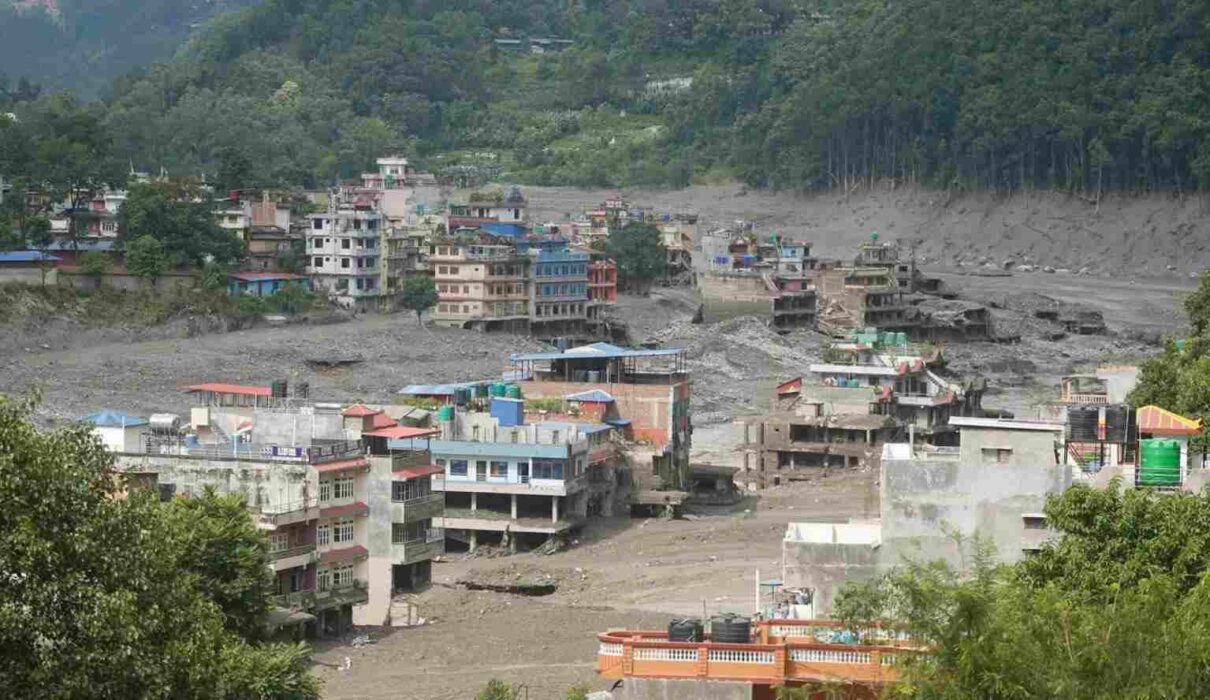
Before getting into legal remedies, it helps to understand the scale of what triggered them. On August 26, 2026, a glacial lake outburst along the upper Bhotekoshi section of the Trishuli River sent flash floods and mudslides through dozens of settlements in Rasuwa and Nuwakot. The disaster also struck the Gyirong Port area on the China-Nepal border, a key trade and tourism crossing.
Officials confirmed dozens of deaths in Nepal within the first day, with the toll rising past 150 as search operations continued, and hundreds of people, including many foreign tourists, were reported missing. Hydropower plants, transmission lines, bridges, and market areas in Rasuwa and Nuwakot sustained heavy damage, cutting off entire communities.
The scale of this disaster is part of why legal help matters so much right now. When infrastructure, government offices, and even land record centers are damaged, families are left uncertain about how to prove ownership, file claims, or even confirm a relative’s death for legal purposes. Understanding your rights early, before paperwork gets more complicated, makes a real difference in how quickly you recover.
Understanding Your Legal Rights After the Nepal Flood 2026
Nepal has a dedicated legal structure for disaster response, and it is worth knowing even if you never expect to need it. The core law is the Disaster Risk Reduction and Management Act, 2074 (2017), often shortened to the DRRM Act. This law is the backbone of every legal claim connected to the Nepal Flood 2026.
The Disaster Risk Reduction and Management Act, 2017
Under this Act, the Government of Nepal can formally declare a flood-hit area as disaster prone, which unlocks specific obligations. Once an area affected by the Nepal Flood 2026 receives this declaration, the government is legally required to provide a minimum standard of relief, covering housing, food, drinking water, health services, and sanitation. This is not charity or discretionary generosity; it is a statutory duty.
The Act also created a layered institutional structure: a National Disaster Risk Reduction and Management Authority, provincial councils and executive committees, and district and local disaster management committees. For families affected by the flood in Rasuwa and Nuwakot, the local and district disaster management committees are usually the first practical point of contact, since they coordinate needs assessment, relief distribution, and referrals for further support.
Compensation Provisions Under Nepali Law
The DRRM Act and related regulations acknowledge that households and, in some cases, private businesses are entitled to government compensation for losses tied to a declared disaster. Compensation categories generally include property damage, agricultural losses, and support for restoring livelihoods.
The exact compensation amounts are typically set through separate government notices issued after a disaster is assessed, so families dealing with the aftermath of this flood disaster should watch for official notices from the Ministry of Home Affairs, the district administration office, or the National Disaster Risk Reduction and Management Authority rather than relying on rumors or social media estimates.
A disaster management fund also exists at the national, provincial, and district level, which is meant to finance both immediate relief and longer-term reconstruction. Legally, any misuse of this fund or fraudulent claims connected to it is treated as an offence under the Act, which cuts both ways: it protects genuine victims from being crowded out by fraudulent claims, but it also means families should keep their documentation accurate and truthful when applying.
How to Apply for Government Compensation After the Nepal Flood 2026
Many families affected by the 2026 Nepal floods are unsure where to start. Here is a realistic, step-by-step approach based on how Nepal’s disaster relief process is designed to work.
Step 1: Register With the Local Disaster Management Committee
Every affected household should register with the ward office or local disaster management committee as early as possible. This registration becomes the official record that your household was affected, and it feeds into the district-level damage assessment that determines who qualifies for relief and compensation tied to the flood.
Step 2: Gather Whatever Documentation You Can
Ideally this includes citizenship certificates, land ownership certificates (lalpurja), house registration documents, and photographs of the damage. If original documents were destroyed in the flood, this is common enough after a disaster of this scale that local offices generally have a process for re-issuing or verifying identity and ownership through secondary evidence, such as tax records, neighbor testimony, or previous government correspondence. Do not assume that losing your paperwork disqualifies you from relief connected to the Nepal Flood 2026; it simply adds an extra verification step.
Step 3: Participate in the Damage and Needs Assessment
District authorities, often working with the Nepali Army, provincial disaster committees, and humanitarian partners, conduct on-the-ground assessments after an event of this scale. Being present, or having a neighbor or local representative confirm your situation, strengthens your claim.
Step 4: Track Official Compensation Notices
Compensation for this flood will be announced through official government channels, not informally. Keep a copy of any acknowledgment or receipt you receive during registration, since this becomes your proof of claim if disbursement is delayed or disputed.
Legal Help for Property, Land, and Business Losses
Property disputes are one of the most common legal headaches after any flood, and the Nepal Flood 2026 is no exception, especially in areas where riverbanks shifted or land was buried under debris.
When Land Boundaries Have Physically Changed
Flash floods like this one can alter riverbeds and erase visible boundary markers. If your land boundary is now unclear because of the flooding, the Land Revenue Office and Survey Department have procedures for re-verifying boundaries using prior survey maps and cadastral records. This process can take time, so it is worth starting early rather than waiting until you need to sell, mortgage, or formally transfer the property.
Business and Livelihood Losses
Shop owners, transport operators, and small hydropower or tourism-linked businesses in Rasuwa and Nuwakot suffered direct losses from the flooding. Businesses registered with the local government may be eligible for separate relief categories under the DRRM framework, distinct from household compensation. It is worth asking the district administration office directly whether business-specific relief has been announced, since these programs are sometimes rolled out later than household relief.
Legal Help for Missing Persons and Death Certification
This is one of the most emotionally difficult, and legally complex, parts of recovering from the Nepal Flood 2026. With hundreds of people reported missing, many families face a painful legal gray zone: they cannot get a death certificate without a body, yet they need legal recognition of the loss to access insurance, inheritance, or compensation.
Presumption of Death Procedures
Nepali law allows for a person to be legally presumed dead after being missing for a defined period under specific circumstances, which can be shortened in mass casualty events through special government provisions or court orders. Families of those missing in this disaster should consult the district court or a legal aid office about whether expedited presumption-of-death procedures apply, since ordinary waiting periods are sometimes reduced after officially declared disasters.
Inheritance and Succession Issues
Once a death is legally confirmed or presumed, succession law determines how property and assets pass to surviving family members. This matters enormously for families rebuilding after this flood, particularly when the deceased was the sole registered landowner. Getting the succession certificate correct from the start avoids years of disputes later, especially in joint family property situations common in rural Nepal.
Insurance Claims Connected to the Nepal Flood 2026
If you or a family member had life insurance, health insurance, crop insurance, or property insurance, this flood disaster likely qualifies as a covered event, but insurers will still expect a formal claim process.
What Insurers Typically Require
Most Nepali insurers, including those regulated under the Nepal Insurance Authority, require a First Information Report or local administration confirmation of the disaster, proof of loss (photographs, repair estimates, or death documentation), and the original policy documents where available. Because so many original documents were lost in the Nepal Flood 2026, insurers are generally expected to accept secondary verification, such as confirmation from the ward office, when originals cannot be produced.
Disputed or Delayed Claims
If an insurance company delays or denies a legitimate claim tied to this flood, policyholders have the right to escalate the matter to the Nepal Insurance Authority, which regulates insurer conduct and can intervene in unresolved disputes. Keeping a written record of every communication with the insurer strengthens your position if the matter needs to go further.
Legal Support for Foreign Tourists and Their Families
Because this flood struck a popular trekking and border-crossing region, a significant number of foreign nationals were among the missing and affected. Families abroad dealing with the aftermath should coordinate with their home country’s embassy or consulate in Kathmandu, which can assist with identification processes, repatriation logistics, and liaising with Nepali authorities on death certification. Travel insurance policies often cover emergency evacuation, medical costs, and in some tragic cases, repatriation of remains, so contacting the travel insurer immediately is a practical first step alongside embassy contact.
Cross-Border Legal Questions Involving China
Because the flooding also affected the Gyirong Port area on the China-Nepal border, some families and businesses face cross-border complications, particularly around damaged trade goods, vehicles, and infrastructure jointly used by both countries. These situations typically require coordination between Nepali and Chinese authorities through diplomatic and trade channels rather than an individual legal claim, so affected businesses should register their losses with Nepal’s Department of Customs and relevant trade bodies as a first step.
A Composite Case Example: How This Plays Out in Practice
To make this concrete, consider a composite scenario built from the kinds of situations legal aid workers commonly see after floods of this scale in Nepal. A family in Nuwakot loses their home and their land certificate is destroyed. The eldest son, who managed the household’s small transport business, is among the missing. The surviving family members are unsure whether to register with the ward office first or wait for a death certificate before doing anything else.
The practical path is to register the household as flood affected immediately, regardless of the missing person’s status, since relief eligibility and the presumption of death process run on separate tracks. While waiting on the legal process for the missing family member, the household can still access minimum relief standards, apply for property compensation using secondary land verification, and consult a legal aid office about expedited presumption of death given the scale of the Nepal Flood 2026. This kind of parallel-track approach, pursuing immediate relief while separately handling longer legal questions, is generally the fastest way through a very difficult situation.
Where to Find Free or Low-Cost Legal Aid
Not every family affected by this disaster can afford a private lawyer, and the good news is that they often do not need one for the initial steps.
Government Legal Aid
Nepal’s legal aid system, coordinated through the Legal Aid Committees under the Ministry of Law, Justice and Parliamentary Affairs, provides free legal assistance to citizens who cannot afford private counsel, particularly for matters like succession, documentation, and disputes with public authorities. District-level legal aid offices are a good starting point for anyone unsure how to proceed after the Nepal Flood 2026.
Bar Associations and Pro Bono Networks
The Nepal Bar Association and various district bar units periodically organize pro bono support during major disasters. Local bar units in Rasuwa, Nuwakot, and neighboring districts are a realistic resource for free consultations on land, compensation, and inheritance questions arising from the flood.
Humanitarian and Civil Society Organizations
International and local humanitarian organizations working on the flood response often include a legal or protection component alongside emergency relief, particularly for child protection, missing persons support, and documentation replacement. These organizations can also help connect families with the right government office when the process feels confusing or opaque.
Practical Action Checklist for Affected Families
If you are dealing with the aftermath of the Nepal Flood 2026 right now, here is a simple order of operations:
- Register your household with the ward office or local disaster management committee immediately, even if you have no documents.
- Photograph all visible damage before cleanup begins, since this becomes part of your compensation record.
- Contact your insurer, if you have any policy, within the claim notification window.
- If a family member is missing, ask the district court or a legal aid office about presumption of death procedures rather than waiting indefinitely.
- Keep every receipt, acknowledgment slip, and official communication in one place.
- Reach out to a free legal aid office before signing anything with a private company offering to “help” with compensation for a fee.
- If land boundaries are unclear, contact the Survey Department early rather than after you need to sell or transfer property.
Key Takeaways
- The Nepal Flood 2026 triggered legal protections under the Disaster Risk Reduction and Management Act, 2017, including a right to minimum relief standards and household compensation once an area is officially declared disaster affected.
- Families should register with their local disaster management committee as the first step, since this record underpins later compensation and relief claims tied to the Nepal Flood 2026.
- Losing original documents in the flood does not disqualify a family from support; secondary verification through local offices is generally accepted.
- Missing persons cases can move forward on a presumption of death track that may be expedited after a declared disaster, separate from ongoing relief eligibility.
- Insurance claims connected to the Nepal Flood 2026 should be filed promptly, with disputes escalated to the Nepal Insurance Authority if needed.
- Free legal aid through government Legal Aid Committees, bar association pro bono programs, and humanitarian organizations is available and should be the first resource families turn to before paying for private legal help.
Final Thoughts
Recovering from the Nepal Flood 2026 is going to take months, and for some families, years. The legal system will not fix everything quickly, and government processes after a disaster of this size are rarely fast. But the framework exists, the rights are real, and the earlier a family engages with registration, documentation, and legal aid, the smoother the path to compensation and closure tends to be. If you are supporting someone through this, the most useful thing you can do today is help them register with their local disaster management committee and connect them with a free legal aid office, rather than waiting for the process to come to them.