
 By
By GM V8 Engine Recall Lawsuit: Latest Developments
The GM V8 engine recall lawsuit has moved into a critical phase as federal regulators and consumers continue reporting engine failures in General Motors trucks and SUVs, including vehicles that already went through GM’s official recall repair. As of August 2026, the National Highway Traffic Safety Administration (NHTSA) has expanded its investigation to cover nearly one million vehicles equipped with the 6.2 liter L87 V8 engine, while a separate, consolidated class action continues to work its way through federal court in Michigan.
This article explains what is currently known about the recall, the NHTSA investigation, and the GM V8 engine recall lawsuit itself, including what plaintiffs allege, how GM has responded, and what options may be available to affected vehicle owners. It is important to understand from the outset that a recall, a federal investigation, and a lawsuit are three distinct things. None of them, on their own, establishes that GM is legally liable. Liability in a civil lawsuit is only established through a court ruling, a jury verdict, or a settlement, none of which has occurred in this litigation as of this writing.
What Is the GM L87 V8 Engine Problem?
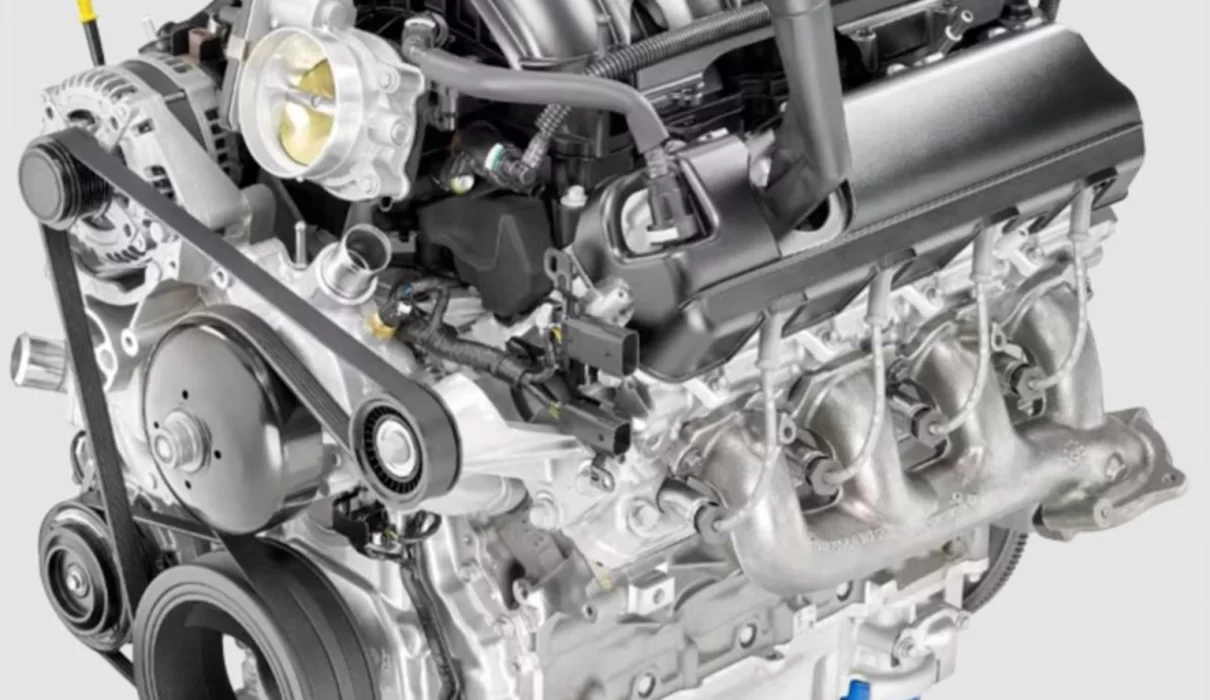
The L87 is General Motors’ 6.2 liter EcoTec3 V8 engine, used across a range of full-size trucks and SUVs. According to GM’s own recall filings and NHTSA documentation, the underlying issue involves manufacturing defects tied to the engine’s connecting rods and crankshaft. GM has attributed the defect to a supplier manufacturing and quality control issue affecting engines built during a specific production window.
The reported mechanism involves a loss of proper lubrication between the crankshaft and its bearings. According to consumer complaints and the allegations later incorporated into the GM V8 engine recall lawsuit, this can cause rod bearing damage, engine knock, sudden loss of power, and in more severe cases, complete engine seizure. Some owners have reported the failure occurring with very low mileage on the vehicle, and a smaller number of complaints referenced engine fires.
It is important to note that the described mechanism, including terms like sediment contamination and out of specification crankshaft dimensions, reflects GM’s own stated engineering findings combined with allegations raised in litigation. The full scope of the underlying cause remains part of an active NHTSA engineering analysis.
Why Did GM Recall the Vehicles?
GM issued Recall 25V-274 on April 24, 2025, covering approximately 597,630 vehicles in the United States, part of roughly 721,000 recalled globally. The recall applied to certain L87 engines manufactured between March 1, 2021, and May 31, 2024. GM identified the issue following its own internal investigation, which followed an earlier NHTSA inquiry opened in January 2025 that had examined more than 877,000 vehicles for engine failure reports.
Under the recall remedy, dealers were instructed to check for a specific diagnostic trouble code associated with rod bearing wear. If the code was present, GM directed a full engine replacement. If the code was not present, the remedy involved changing the engine oil from the original 0W-20 viscosity to a heavier dexos R 0W-40 oil and installing a new oil fill cap. This inspection based, two tier remedy later became a central point of dispute in the GM V8 engine recall lawsuit, with plaintiffs arguing the oil change option does not address the root mechanical cause of the defect.
Which GM Vehicles Are Affected?
The GM V8 recall and the related NHTSA investigation cover a range of full size Chevrolet, GMC, and Cadillac models equipped with the L87 6.2 liter V8 engine. According to NHTSA investigation data current as of August 2026, affected nameplates include:
- Chevrolet Silverado engine recall coverage for the Silverado 1500
- Chevrolet Tahoe engine recall coverage
- Chevrolet Suburban engine recall coverage
- GMC Sierra engine recall coverage for the Sierra 1500
- GMC Yukon engine recall coverage, including the Yukon XL
- Cadillac Escalade engine recall coverage, including the Escalade ESV
The original recall applied to model years 2021 through 2024. The expanded NHTSA engineering analysis opened in August 2026 broadens the population under review to model years 2021 through 2026, reflecting reports of engine failures in vehicles built after the original recall’s production window. NHTSA and consumer advocates caution that not every vehicle within these model years is necessarily affected, and owners should verify their specific vehicle identification number rather than assuming coverage based on model and year alone.
What Does the Latest NHTSA Investigation Mean?
On August 20, 2026, NHTSA’s Office of Defects Investigation opened Engineering Analysis EA26005, the agency’s most serious tier of defect investigation. This action escalated a recall query that had been opened in January 2026 after regulators began receiving reports that engines were failing even after undergoing GM’s official recall remedy. The new engineering analysis now covers 997,743 vehicles, nearly one million units.
According to NHTSA data cited by multiple outlets covering the investigation, the agency has received 499 complaints alleging engine failure in vehicles that had already completed the recall remedy, with the majority of those coming from owners who received the oil viscosity change rather than a full engine replacement. NHTSA also logged 191 additional complaints involving L87 engines built after the original recall’s May 2024 production cutoff, bringing the total number of newly reported failure incidents examined in this phase to roughly 690. GM has separately reported receiving several thousand post remedy complaints directly from customers.
An engineering analysis is an investigative step, not a finding of a defect and not a new recall. NHTSA GM investigation activity of this kind can lead to a expanded recall, a required design change, or a determination that no further action is warranted, depending on what the agency’s technical review concludes. As of August 2026, the engineering analysis remains open and no additional recall has been issued as a result of this expanded review.
What Is the GM V8 Engine Recall Lawsuit About?
Separate from the NHTSA investigation, the GM V8 engine recall lawsuit refers to a consolidated federal class action pending in the U.S. District Court for the Eastern District of Michigan. Approximately a dozen individual lawsuits filed throughout 2025 over L87 engine failures were consolidated before U.S. District Judge Shalina D. Kumar, with the case proceeding under a lead docket number and additional related case names, including Powell et al. v. General Motors, LLC and Rittereiser et al. v. General Motors, LLC.
Plaintiffs filed a consolidated class action complaint on February 26, 2026, running 389 pages and naming 44 individual plaintiffs on behalf of a proposed nationwide class of owners and lessees of affected GM trucks and SUVs. This GM class action lawsuit is a civil consumer protection case, not a criminal proceeding, and it does not currently include a certified class, meaning no class of consumers has yet been formally approved by the court to pursue claims collectively.
What Are Plaintiffs Alleging?
The claims raised in the GM engine failure lawsuit are allegations only and have not been proven in court. According to the consolidated complaint and related court filings, plaintiffs allege that:
- The L87 engine suffers from a manufacturing defect that causes a loss of lubrication between the crankshaft and its bearings
- GM knew or should have known about the defect before issuing its April 2025 recall
- The recall remedy, particularly the oil viscosity change option, is inadequate to fix the underlying mechanical problem
- The inspection-based approach used to determine which vehicles receive an engine replacement versus an oil change is unreliable, since some engines have failed shortly after passing inspection
- The recall’s production date window improperly excludes vehicles that may carry the same defect
- Owners and lessees have suffered financial harm, including diminished vehicle value and repair costs
The complaint also references data reported to NHTSA, including tens of thousands of consumer complaints and incident reports logged with the agency and with GM directly, along with a smaller number of reported crashes, injuries, and engine fires associated with L87 engine failures. These figures come from complaint data compiled during the litigation and investigation process and reflect reported incidents, not confirmed causation findings by a court.
Has GM Responded to the Lawsuit?
GM has disputed the claims raised in the GM V8 engine recall lawsuit. On June 8, 2026, GM filed a motion to dismiss the consolidated complaint, arguing in substantial part that its existing recall already addresses the alleged defect and that the claims should not proceed as pleaded. As of this writing, that motion to dismiss remains pending before the court, and no ruling on the merits of the case has been issued.
GM has not been found liable for the allegations raised in this litigation, and the company has not publicly conceded that the recall remedy is insufficient. It is standard practice for automakers facing consolidated class actions to contest the claims and file dismissal motions early in the litigation process, and the outcome of GM’s motion will significantly shape how the case proceeds.
Who May Be Affected by the Litigation?
Individuals who may be affected by the GM V8 engine recall lawsuit generally include people who purchased or leased a covered Chevrolet, GMC, or Cadillac vehicle equipped with the L87 6.2 liter V8 engine within the relevant model years, particularly those who experienced an engine failure, received recall related repairs, or both. Whether a specific individual has viable legal rights depends on several factors, including:
- The exact vehicle identification number and whether it falls within the recall or investigation population
- Whether the vehicle was purchased new, purchased used, or leased
- Whether the vehicle already received recall repairs, and what type of repair was performed
- Whether the owner experienced an actual engine failure or related damages
- The applicable state law governing consumer protection and warranty claims
- The current procedural status of the consolidated litigation, since no class has yet been certified
Because these factors vary significantly from one owner to another, general information about the GM V8 recall lawsuit cannot substitute for individualized legal advice from a qualified attorney reviewing a specific vehicle history.
What Compensation Could Vehicle Owners Pursue?
At this stage, no settlement has been reached, no verdict has been issued, and no compensation amounts have been established in the GM V8 engine recall lawsuit. Any specific dollar figures, eligibility criteria, or payout structures reported elsewhere should be treated with caution unless confirmed through official court filings or a verified settlement administrator.
In consumer class actions of this type, potential forms of recovery that plaintiffs may seek, if the case proceeds successfully, can include compensation for diminished vehicle value, reimbursement of repair costs, extended warranty coverage, or other remedies tied to the alleged defect. Whether any of these outcomes materialize depends entirely on how the litigation unfolds, including the pending motion to dismiss, potential class certification, settlement negotiations, or a trial. Owners should be skeptical of any third party claiming to guarantee a specific payout before the case has reached that stage.
What Should GM Vehicle Owners Do Now?
Owners of vehicles potentially affected by the GM V8 engine recall lawsuit and the related NHTSA investigation can take several practical steps:
- Confirm recall status by checking the vehicle identification number through NHTSA’s recall lookup tool or a GM dealer
- Keep detailed records of any recall repairs performed, including invoices, inspection results, and the specific remedy applied
- Document any engine-related symptoms, such as knocking noises, warning lights, or loss of power, along with dates and mileage
- Report ongoing problems directly to NHTSA, since consumer complaints inform both the agency’s investigation and future litigation
- Consult a qualified attorney experienced in automotive defect litigation to evaluate individual legal options, including whether joining or monitoring the existing class action may be appropriate
- Continue to have the vehicle serviced according to GM’s guidance, since delaying necessary maintenance could complicate both safety and any future legal claims
Key Takeaways
The GM V8 engine recall lawsuit sits at the intersection of an active NHTSA investigation and a consolidated federal class action, both centered on GM’s L87 6.2-liter V8 engine used in popular Chevrolet, GMC, and Cadillac trucks and SUVs. NHTSA’s expanded engineering analysis, opened in August 2026, reflects ongoing concern that the original recall remedy may not have fully resolved the underlying defect for all affected vehicles. Separately, a consolidated class action filed in the Eastern District of Michigan alleges that GM knew or should have known about the defect and that its recall remedy is inadequate, claims GM disputes through a pending motion to dismiss.
No court has found GM liable, no class has been certified, and no settlement or compensation program currently exists. Owners of affected vehicles should verify their recall status, document any engine issues, and consult a qualified attorney to understand their individual legal options as this litigation and the federal investigation continue to develop.