
 By
By Legal disclaimer: This article explains general legal concepts and is not legal advice. Felony/misdemeanor thresholds vary by state. If you’re facing a charge, speak with a criminal defense attorney.
Is Battery a Felony or a Misdemeanor?
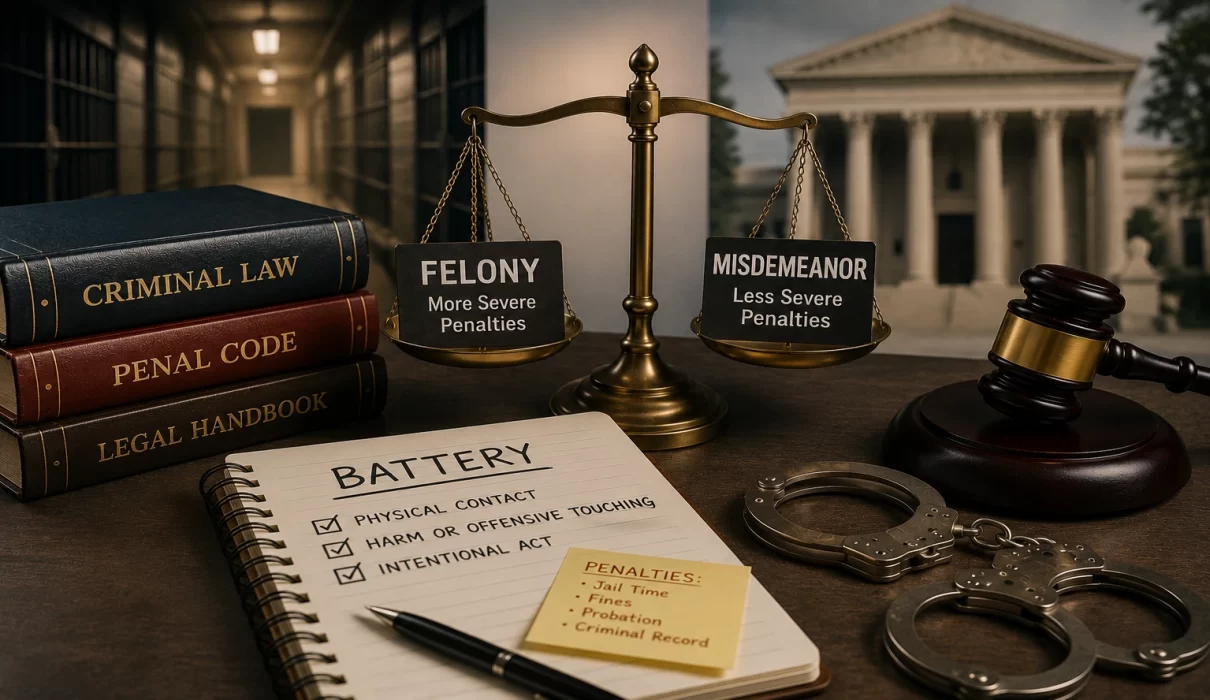
It depends on the facts. Simple battery – intentional, unlawful contact without a weapon or serious injury is typically a misdemeanor. Aggravated battery – the same contact plus a weapon, serious injury, or protected victim — is typically a felony. As with assault, there’s no single national threshold; classification depends on the specific facts and your state’s penal code. See our companion pillar, Is Assault a Felony or a Misdemeanor?, for how the same logic applies on the assault side.
What Determines Whether Battery Is Charged as a Felony
- Severity of injury — minor pain versus broken bones, disfigurement, or permanent harm
- Weapon involvement — use of any object capable of causing death or serious injury
- Victim’s protected status — police officers, children, elderly individuals, and healthcare workers frequently trigger automatic felony treatment
- Strangulation or suffocation — many states now classify this as automatically aggravating regardless of visible injury
- Prior record — repeat battery offenses can be elevated to felony status in some states even without other aggravating factors
Misdemeanor Battery: What to Expect
Misdemeanor (simple) battery generally involves:
- Fines and probation
- Up to 6 to 12 months in county jail, depending on the state
- Possible anger management or counseling requirements, particularly in domestic cases
Felony Battery: What to Expect
Felony (aggravated) battery carries significantly more serious consequences:
- 1 to 15+ years in state prison, depending on the state and severity
- Mandatory minimums in many states when a weapon is involved
- A permanent felony record affecting employment, housing, and certain civil rights
- Sentencing enhancements when the victim is in a protected category
Felony vs. Misdemeanor Battery at a Glance
| Misdemeanor (Simple) Battery | Felony (Aggravated) Battery | |
| Weapon involved? | No | Often yes |
| Injury level | Minor or none | Serious or permanent |
| Victim status | No protected category required | May involve protected victim |
| Typical sentence | Fines, probation, up to ~1 year in jail | 1 to 15+ years in state prison |
Can Battery Charges Escalate After the Fact?
Yes, in a specific sense – if an injury initially believed to be minor turns out to be more serious, or if new evidence surfaces (a weapon was involved, the victim was in a protected category), prosecutors can amend or elevate a charge as the case develops. This is part of why an initial charge level isn’t necessarily the final one.
Frequently Asked Questions
Is battery a felony or misdemeanor?
Is simple battery ever a felony?
What’s the sentence for felony battery?
Can a felony battery charge be reduced to a misdemeanor?
Talk to an Attorney
Whether your case is charged as a misdemeanor or felony has major consequences, and it often hinges on a single disputed fact. Speak with a criminal defense attorney to understand where your case stands.