
 By
By Legal disclaimer: This article explains the general criminal reporting process and is not legal advice. Procedures vary by state and county. If you’re in immediate danger, call 911. For guidance on your specific situation, speak with a criminal defense attorney or a local victim’s advocate.
Quick Answer
To press charges against someone, you report the incident to police, provide a statement and any evidence, and the case is then referred to a prosecutor – who is the one who actually decides whether to formally charge the accused. You don’t file charges yourself; you initiate a report that a prosecutor evaluates. Before starting, it helps to understand what “pressing charges” actually means, since the process differs from how the phrase is commonly used.
How to Press Charges: Step-by-Step
1. Ensure your immediate safety first
If you’re in danger or need medical attention, address that before anything else. Call 911 for emergencies. Medical documentation from this stage can also become important evidence later.
2. Report the incident to police
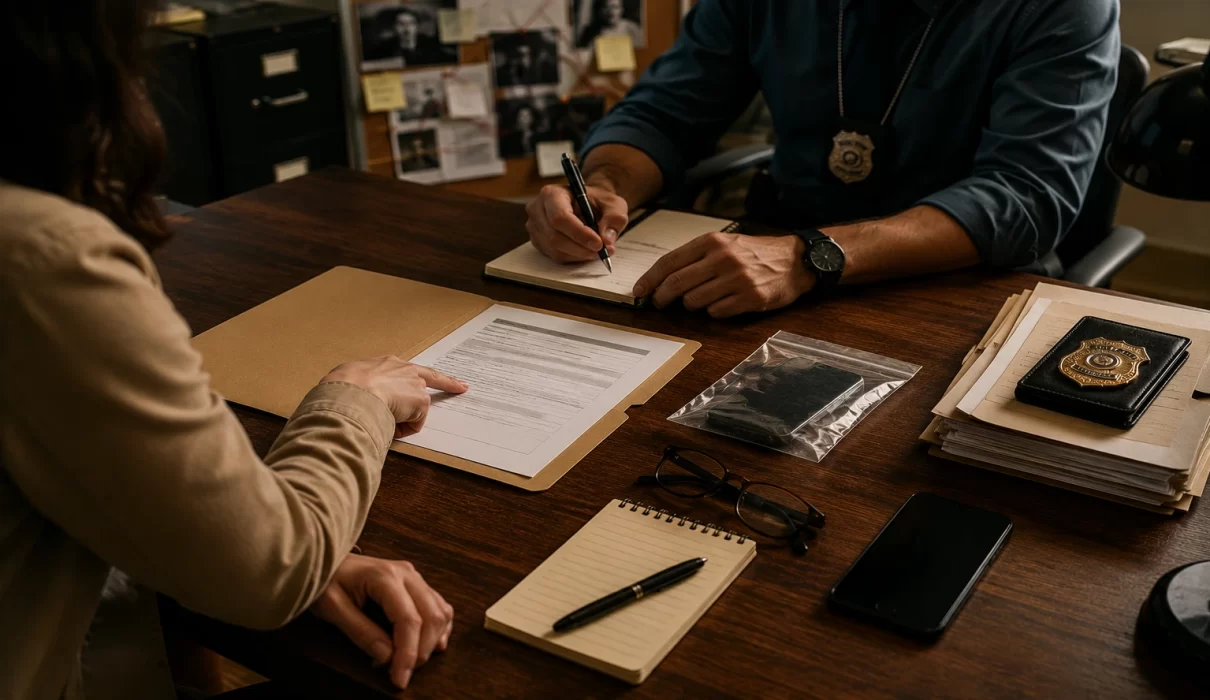
Call the non-emergency police line or go to your local station to file a report. Be as specific as possible: date, time, location, what happened, and any witnesses. This report is the formal starting point of the process – it’s what “pressing charges” actually refers to in practice.
3. Provide a detailed statement
An officer will typically take a written or recorded statement. Include everything relevant, even details that feel minor – inconsistencies discovered later can weaken a case, so accuracy and completeness matter more than a polished narrative.
4. Gather and submit evidence
This might include photos of injuries, damaged property, text messages, voicemails, medical records, or witness contact information. The stronger the evidence, the more the prosecutor has to work with when deciding whether to charge the case.
5. Cooperate with the investigation
Police may follow up with additional questions, interview witnesses, or request further documentation. Staying reachable and responsive during this phase matters – cases can stall or weaken if the person who reported becomes difficult to reach.
6. Wait for the prosecutor’s charging decision
Once the investigation is complete, the case goes to the prosecutor’s office. They decide independently whether the evidence supports formally charging the accused, and with what specific offense. This step is entirely out of the reporting person’s hands – see what happens when you press charges for what this phase typically looks like.
7. Understand your role going forward
If charges are filed, you may be asked to testify or provide further statements as the case proceeds through arraignment, pretrial, and potentially trial. A victim’s advocate (often available through the prosecutor’s office) can help you understand what to expect at each stage.
How Long Do You Have to Press Charges?
This is governed by the statute of limitations, which varies significantly by state and by the severity of the offense – some serious felonies have no limitation period at all, while lesser misdemeanors may need to be reported and charged within one to a few years. Waiting doesn’t automatically bar a case, but it can weaken evidence and witness memory, so reporting as soon as it’s safe to do so generally strengthens the outcome. See our full breakdown: Statute of Limitations on Assault & Battery (State-by-State Guide). For situations involving delayed reporting specifically, see Can You Press Charges After the Fact?
Does It Cost Money to Press Charges?
No. Reporting a crime and cooperating with a police investigation and prosecution is a public process – you’re not filing a private lawsuit and don’t pay court fees to initiate it. Costs can arise later if you choose to also pursue a separate civil case for damages, but that’s a distinct legal path from the criminal process described here.
Can You Press Charges Without Physical Proof?
Yes, though it affects the strength of the case. A police report and witness testimony (including your own statement) can be enough for an investigation to begin and, in some cases, for a prosecutor to move forward – physical evidence isn’t always required, particularly in incidents with credible witnesses. That said, prosecutors generally need enough evidence, of whatever kind, to meet the “beyond a reasonable doubt” standard at trial, so weaker cases are more likely to be declined, reduced, or resolved through a plea.
How to Press Charges for Assault Specifically
The general process above applies to assault and battery incidents the same way it applies to other crimes, with a few practical notes specific to this category:
- Document any physical injuries with photos and, if applicable, medical records – this is often central evidence in assault and battery cases specifically.
- If the incident involved a partner or household member, note that many states have specific domestic violence reporting protocols; see Domestic Battery Explained.
- If a weapon was involved or the injury was serious, the case may be charged as aggravated assault or aggravated battery rather than a simple charge, which can affect timelines and prosecutorial priority.
Do You Need a Lawyer to Press Charges?
You don’t need a lawyer to report a crime or cooperate with an investigation – that part of the process doesn’t require legal representation. However, an attorney can be valuable if you’re also considering a civil suit, navigating a complex situation, or unsure how to handle related legal questions. See Do You Need a Lawyer to Press Charges? for a fuller breakdown of when legal counsel genuinely helps versus when it isn’t necessary.
Is It Worth Pressing Charges?
Whether to go through this process is a personal decision shaped by your relationship to the accused, your safety, and what outcome you’re hoping for. We cover this decision directly, without pressure in either direction, in Is It Worth Pressing Charges? Pros, Cons & What to Expect.
Frequently Asked Questions
How do you press charges against someone?
How long do you have to press charges for assault?
Does it cost money to press charges?
Can someone press charges without proof?
Can you press charges after the fact, if time has passed?
Talk to an Attorney
If you’re navigating this process, whether you’re the person harmed or the person accused, speaking with a criminal defense attorney can clarify what to expect in your specific state and situation.