
 By
By The premium tequila market has grown explosively over the past decade, driven by consumer demand for high-end spirits crafted from pure agave. However, recent legal challenges have placed one of the world’s most recognizable brands under intense scrutiny. The phrase Don Julio Lawsuit refers to a series of federal consumer class action lawsuits filed against global beverage giant Diageo North America.
These lawsuits allege false advertising, deceptive trade practices, and product mislabeling. Plaintiffs allege that certain Don Julio products marketed and sold as 100 percent Blue Weber Agave actually contain significant concentrations of non-agave alcohol, such as cane sugar spirit. Diageo strongly denies these allegations, maintaining that its spirits strictly adhere to all legal requirements and industry standards.
Understanding the distinction between unverified court allegations, scientific testing cited by attorneys, and confirmed judicial rulings is essential for consumers following these developments. Below is a comprehensive look at the origin of these filings, the legal arguments, and the current status of the litigation in 2026.
What Is the Don Julio Lawsuit?
The Don Julio Lawsuit is not a single nationwide lawsuit, nor is it a multi-district litigation with a confirmed settlement. Instead, it encompasses multiple civil class action complaints filed in U.S. federal courts by consumers and commercial buyers.
The initial action, Pusateri et al. v. Diageo North America, Inc. (Case No. 1:25-cv-02482), was filed in May 2025 in the U.S. District Court for the Eastern District of New York. Additional legal actions followed in California and Florida federal courts, expanding the scope of allegations across multiple jurisdictions.
These lawsuits allege that Diageo engaged in deceptive practices by labeling Don Julio products as pure agave tequila while allegedly blending them with cheaper, non-agave sugars or industrial spirits. The legal actions seek class certification, monetary damages for affected consumers, and court injunctions requiring corrected product labeling.
Ownership and Industry Background: Who Owns Don Julio Tequila?
Don Julio was founded in 1942 by Don Julio González-Frausto Estrada, who revolutionized tequila production by focusing on quality and long maturation cycles. In 2014, global spirits leader Diageo acquired full control of the Don Julio brand as part of a strategic expansion into high-margin luxury spirits.
Today, Diageo is one of the world’s largest producers of spirits, managing a portfolio that includes Don Julio, Casamigos, Johnnie Walker, and Smirnoff. According to corporate filings, Don Julio represents a major market share in the luxury tequila category. Because of its dominant position, the brand’s marketing practices carry significant influence across the global beverage industry.
Understanding Tequila Standards: What Does “100% Agave” Mean?
To understand the core of the litigation, consumers must understand federal and international regulations governing tequila classification. Under U.S. federal law enforced by the Alcohol and Tobacco Tax and Trade Bureau (TTB), spirits sold as tequila in the United States must comply with the official standard of identity established by the Mexican government.
Under Mexican law, specifically Official Mexican Standard NOM-006-SCFI-2012 overseen by the Consejo Regulador del Tequila (CRT), tequila is divided into two distinct legal categories:
-
100% Agave Tequila: Produced exclusively from the fermented sugars of the Blue Weber agave plant (Agave tequilana Weber var. azul) grown within designated Mexican regions. No additional sugars, non-agave alcohols, or spirit additives may be added during fermentation.
-
Tequila (Mixto): Produced using at least 51 percent Blue Weber agave sugars, with the remaining 49 percent derived from non-agave sources, such as sugarcane or corn. These products cannot legally use the phrase “100% agave” on their labels.
Because Blue Weber agave takes five to seven years to mature, pure agave tequila is significantly more expensive to cultivate and distill than grain or cane spirits.
What Are Consumers Alleging About Don Julio?
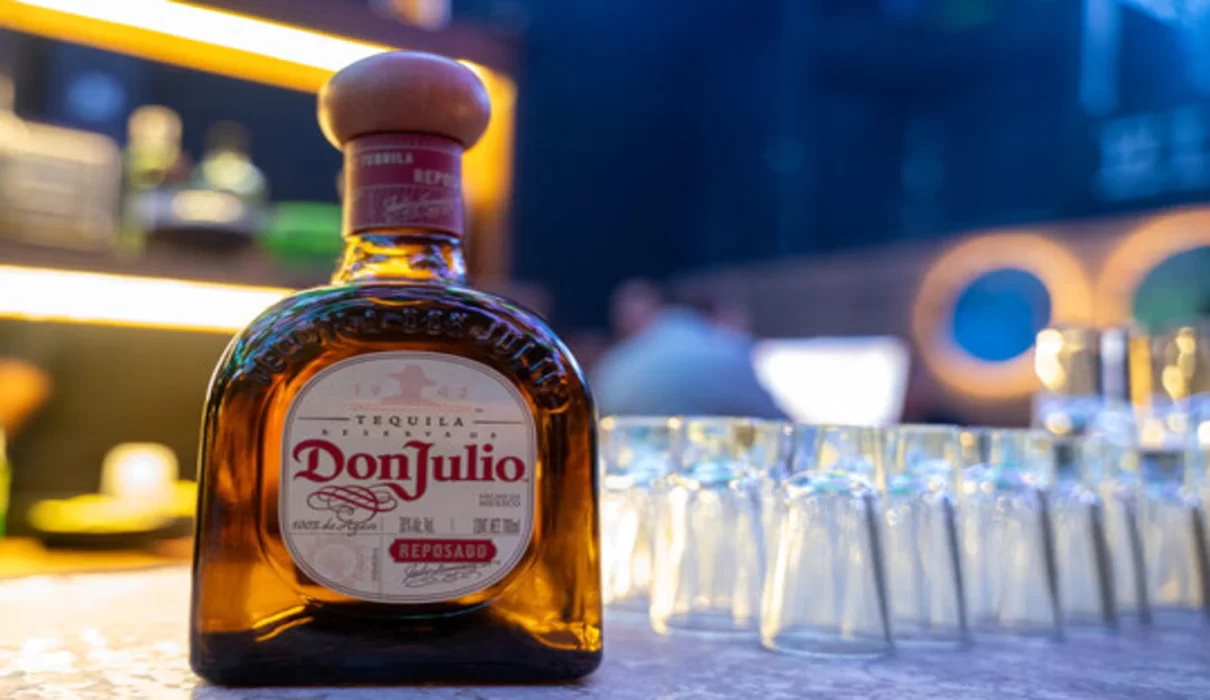
The plaintiffs in the pending lawsuits allege that Diageo misled buyers by placing “100% Agave,” “100% Blue Weber Agave,” or “100% de Agave” prominently on bottle labels, packaging, and marketing materials for Don Julio products, including Don Julio Blanco, Reposado, and Añejo.
The legal complaints assert that despite these explicit statements, certain production batches contain non-agave ethanol derived from sugarcane or corn. Plaintiffs argue that substituting agave with cheaper spirits reduces production costs while maintaining premium prices, resulting in consumer deception.
It is critical to note that a lawsuit filing contains unverified allegations. A court has not determined that Don Julio products are adulterated or deceptively labeled.
Why Plaintiffs Claim They Paid a Premium Price
A central argument in these class actions relies on the legal theory of “price premium injury.” Plaintiffs argue that consumers choose Don Julio over lower-cost alternatives specifically because of its advertised purity and craft heritage.
By allegedly selling a spirit that functions as a mixed alcohol product under a “100% Agave” label, plaintiffs argue that Diageo:
- Extracted higher prices than the product was worth in the market.
- Induced consumers into purchases they would not have made had label details been complete.
- Undercut honest competitors who maintain strict 100 percent agave formulation standards.
These claims form the basis for financial restitution under state consumer protection statutes, such as the New York General Business Law and the California Unfair Competition Law.
Testing and Evidence Referenced in Court Filings
To support their initial complaints, attorneys representing the plaintiffs relied on specialized private laboratory testing rather than routine regulatory inspections.
The primary scientific methodology cited in court filings involves Carbon Isotope Ratio Analysis (CIRA) and Nuclear Magnetic Resonance (NMR) Spectroscopy.
- Carbon Isotope Ratio Analysis: Agave utilizes a specific photosynthetic pathway known as Crassulacean Acid Metabolism (CAM), whereas sugarcane utilizes a C4 photosynthetic pathway. Because CAM and C4 plants absorb carbon-12 and carbon-13 isotopes in different ratios, isotope analysis of the ethanol in a finished spirit can identify non-agave sugars.
- Laboratory Findings Alleged by Plaintiffs: Filings in California and New York claim that private isotope testing revealed that tested samples contained non-agave-derived ethanol, with some filings alleging agave content as low as 33 to 42 percent in specific bottles.
While isotope testing is a recognized analytical method, independent government bodies have not published official findings confirming these private test results. Court filings reflect claims brought by litigation testing, which must be tested through formal discovery and trial proceedings.
For details on how courts evaluate technical evidence in class action claims, review our overview of consumer class actions and false advertising lawsuits.
Key Lawsuits and Filings
The May 2025 New York Federal Lawsuit
On May 5, 2025, plaintiffs filed Pusateri et al. v. Diageo North America, Inc. in the U.S. District Court for the Eastern District of New York. The plaintiffs—comprising individual consumers and a commercial restaurant entity—alleged that Diageo violated New York consumer protection laws, committed breach of express warranty, and engaged in unjust enrichment. The lawsuit requested over $5 million in statutory and compensatory damages.
The California Lawsuit and RICO Claims
In July 2025, a separate class action complaint was filed in the U.S. District Court for the Northern District of California by consumer Jacqueline Jackson (Jackson v. Diageo North America, Inc.). This complaint raised similar labeling allegations and asserted civil claims under the Racketeer Influenced and Corrupt Organizations (RICO) Act. The lawsuit alleged an “association-in-fact enterprise” between parent producers and regulatory oversight bodies.
Additional Consolidated Actions
Throughout late 2025 and early 2026, additional consumer complaints were filed in Florida and other federal districts, targeting both Don Julio and Casamigos brands. These actions raise similar core claims regarding product purity and label representations.
What Plaintiffs Are Seeking from Diageo
Across the various federal filings, the plaintiffs ask the court for specific legal and financial remedies, including:
- Class Certification: Formal judicial authorization allowing representative plaintiffs to sue on behalf of all consumers who purchased affected Don Julio products during a specified statutory period.
- Monetary Damages: Statutory damages, treble damages under applicable state consumer protection laws, and restitution for premium price overpayments.
- Injunctive Relief: Court orders requiring Diageo to cease using “100% Agave” labeling or alter production processes to ensure full compliance.
- Attorney Fees and Costs: Coverage of legal expenses and expert testing costs incurred during litigation.
How Has Diageo Responded?
Diageo has strongly denied all allegations of false advertising and adulteration. In official press statements and legal responses filed with the U.S. District Court for the Eastern District of New York, the company stated:
“All Casamigos and Don Julio tequilas labeled as ‘100% agave’ are made from 100% blue weber agave. We will vigorously defend the quality and integrity of our tequilas in court, and against anyone who is spreading misinformation and lies about our products.”
Legal counsel for Diageo has filed formal Motions to Dismiss the complaints. Defense attorneys argue that:
- The products strictly follow regulatory approvals from Mexico’s Tequila Regulatory Council (CRT) and the U.S. TTB.
- The plaintiffs’ private testing relies on flawed methodology that fails to account for natural variations in agave maturation and distillation.
- The complaints fail to satisfy federal pleading standards for fraud and breach of warranty claims.
Fact Check: Has a Judge Ruled That Don Julio Is Not 100% Agave?
No court or regulatory agency has ruled that Don Julio is adulterated, “fake,” or mislabeled.
In the U.S. legal system, filing a complaint represents the start of a dispute, not a legal finding of liability. The allegations in these complaints remain unproven assertions. Until a court considers admissible scientific evidence, hears expert testimony, and issues a final judgment, Don Julio products remain legally compliant and cleared for retail distribution.
Is There a Don Julio Class Action Settlement or Payout?
As of 2026, there is no Don Julio class action settlement, settlement fund, or claim form available.
Claims circulating on social media or unofficial websites suggesting that consumers can submit receipts for immediate cash payouts are inaccurate. The litigation remains in preliminary procedural phases.
Because the cases are currently at Stage 2 and Stage 3, no settlement discussions or claim programs have been approved by the court. Consumers seeking details on verified court resolutions can refer to our guide on class action settlements and general lawsuit updates.
Who May Potentially Be Included in a Proposed Class?
If a federal court eventually certifies a class action or approves a settlement agreement, the proposed class would likely include:
- All individual consumers who purchased covered Don Julio tequila products in the United States for personal or household consumption during a defined multi-year period.
- Commercial entities, such as bars or restaurants, that purchased covered products for retail resale, depending on specific subclass definitions.
Because no class has been certified, consumers do not need to take formal legal action to protect their potential rights. Class membership is generally automatic if a settlement is reached and approved by the court.
Consumer Caution: Protecting Personal Information
When high-profile product liability cases generate public interest, unauthorized third-party websites often launch forms claiming to register consumers for compensation.
Consumers should exercise caution before submitting personal or financial information online:
- Avoid Unverified Claim Forms: Do not submit Social Security numbers, bank account details, or payment information to commercial landing pages promising instant settlement payouts.
- Distinguish Law Firm Ads from Official Portals: Law firm lead-generation websites are not court-appointed settlement administration portals.
- Verify Official Sources: If a settlement is eventually reached, the federal court will appoint an official administrator to establish a secure, dedicated domain ending in
.comor.org.
To learn how consumer rights are protected during product litigation, consult our resource on consumer protection and product liability.
Verified Status of the Don Julio Litigation in 2026
As of mid-2026, the primary federal lawsuits in the U.S. District Court for the Eastern District of New York (Pusateri et al. v. Diageo North America, Inc.) remain in procedural briefing.
Key current developments include:
- Pending Motions to Dismiss: The presiding judge is considering Diageo’s motions to dismiss the plaintiffs’ claims.
- Stay Requests: The parties have submitted briefs regarding whether procedural discovery should be stayed pending the court’s motion rulings.
- No Class Certification: The court has not yet ruled on whether to certify the litigation as a class action.
- Active Retail Sales: Don Julio products continue to be distributed and sold across global markets without regulatory restriction.
Frequently Asked Questions
What is the Don Julio Lawsuit?
The Don Julio Lawsuit refers to multiple federal consumer class action complaints filed against Diageo North America alleging that certain Don Julio tequila products labeled as “100% agave” contain non-agave sugars or cane spirits.
Why is Don Julio being sued?
Plaintiffs claim that Diageo engaged in false advertising, deceptive trade practices, and mislabeling by marketing spirits as 100 percent Blue Weber Agave while private testing allegedly showed concentrations of non-agave alcohol.
Is Don Julio really 100% agave?
Diageo maintains that all Don Julio products labeled as 100% agave are made entirely from Blue Weber agave in full compliance with Mexican and U.S. regulatory standards. No court or federal agency has found that Don Julio products are mislabeled or adulterated.
Is there a Don Julio class action lawsuit?
Yes, multiple class action complaints have been filed in federal courts in New York, California, and Florida. However, these cases are in early procedural stages, and no class has been formally certified by a judge.
Is there a Don Julio lawsuit settlement?
No. There is no class action settlement, settlement fund, or court-approved payout for Don Julio lawsuits in 2026. The cases remain active in federal court.
Can I file a Don Julio lawsuit claim?
No claim process exists at this time because no settlement has been reached and no judgment has been entered against Diageo.
Is there a Don Julio lawsuit payout?
No compensation or payout is available. Assertions of guaranteed financial compensation or active claim forms are inaccurate.
Which Don Julio products are mentioned in the lawsuits?
The complaints primarily reference core expressions, including Don Julio Blanco, Don Julio Reposado, and Don Julio Añejo, with some filings also mentioning related Diageo tequila brands such as Casamigos.
Where can consumers find official Don Julio lawsuit updates?
Consumers can track verified updates through official federal court dockets via PACER, official court orders, or recognized legal news sources reporting on civil litigation.
Conclusion
The class action lawsuits against Diageo highlight growing consumer interest in product authenticity, labeling accuracy, and transparency within the spirits industry. While plaintiffs rely on private scientific testing to allege that certain Don Julio products contain non-agave alcohol, these claims remain unproven allegations in federal court. Diageo continues to vigorously defend the purity and regulatory compliance of its tequila portfolio. With no settlement established and motions to dismiss currently under judicial review in 2026, consumers should rely on official court filings rather than unverified online claims to stay informed on this ongoing litigation.